






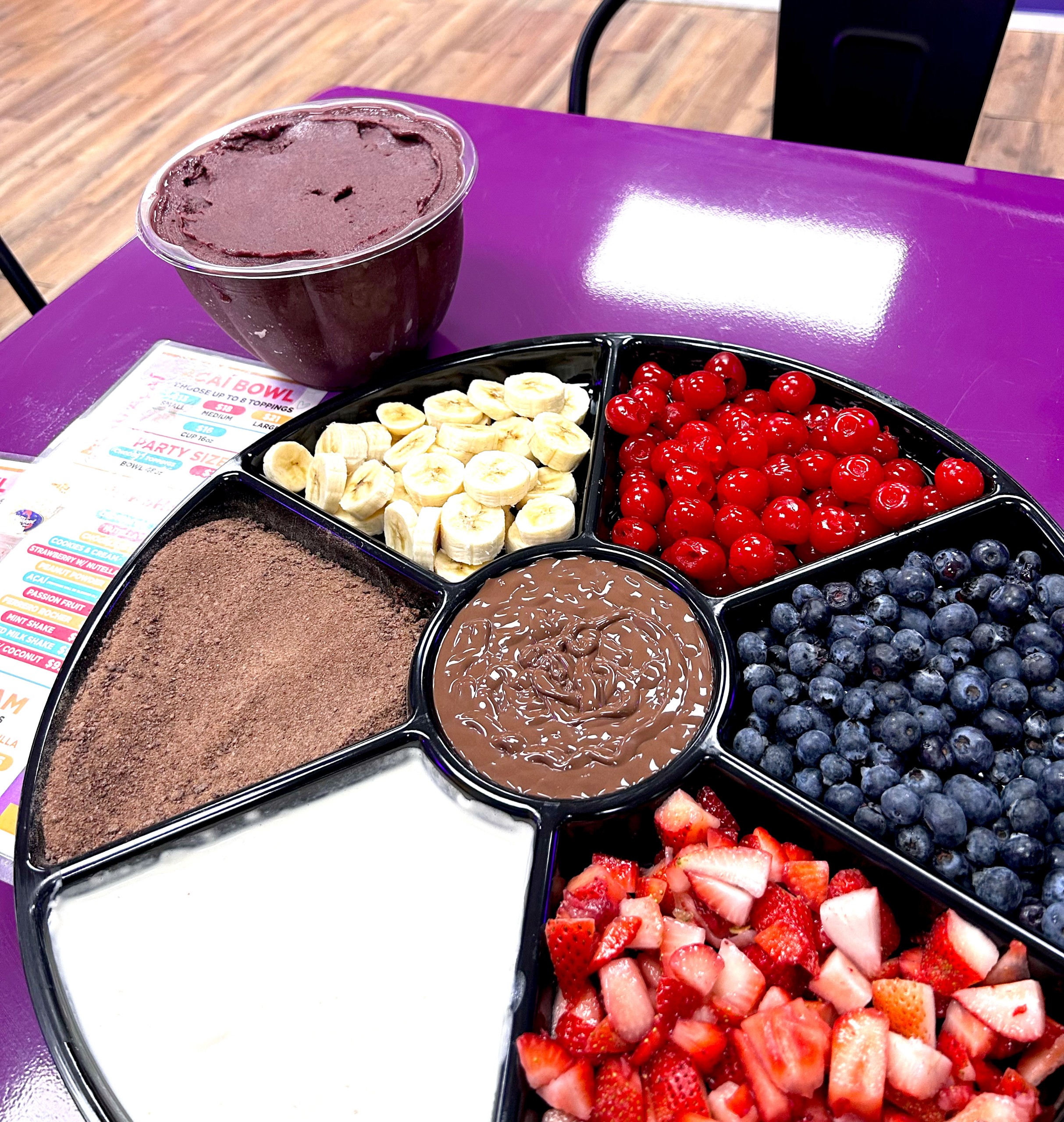
The fruit, not the syrup
Açaí grows in the várzea, the stretch of forest where the Amazon climbs over its banks twice a day and then falls back. The fruit hangs in clusters at the top of palms tall enough to clear the canopy, and it is still gathered the only way that works: someone climbs.
Most of each berry is seed. What ends up in your bowl is the thin purple skin around it, which is why real açaí tastes closer to earth and dark chocolate than to grape candy — and why the bright, sweet version sold elsewhere has to come from a bag of syrup.
- The Amazon
Picked before the heat
Harvest starts at first light, family by family along the river. Climbers go up barefoot with a rope loop and bring the clusters down whole.
- The same day
Soaked, then pulped
The berries soak in warm water until the skin gives, then go through the pulper within hours. Açaí does not keep — the flavor starts leaving the day it is picked.
- Peabody, MA
Frozen once, served thick
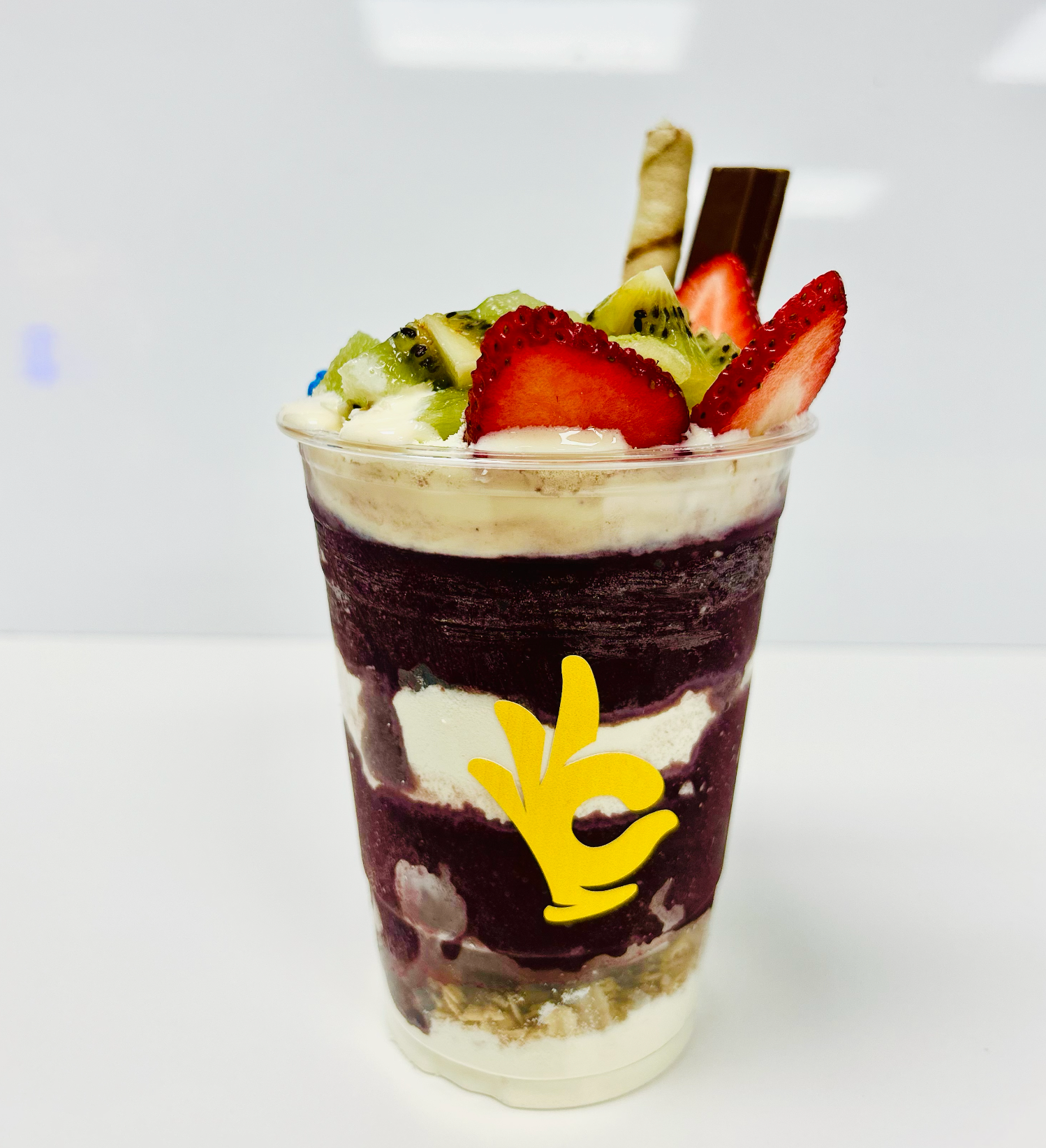
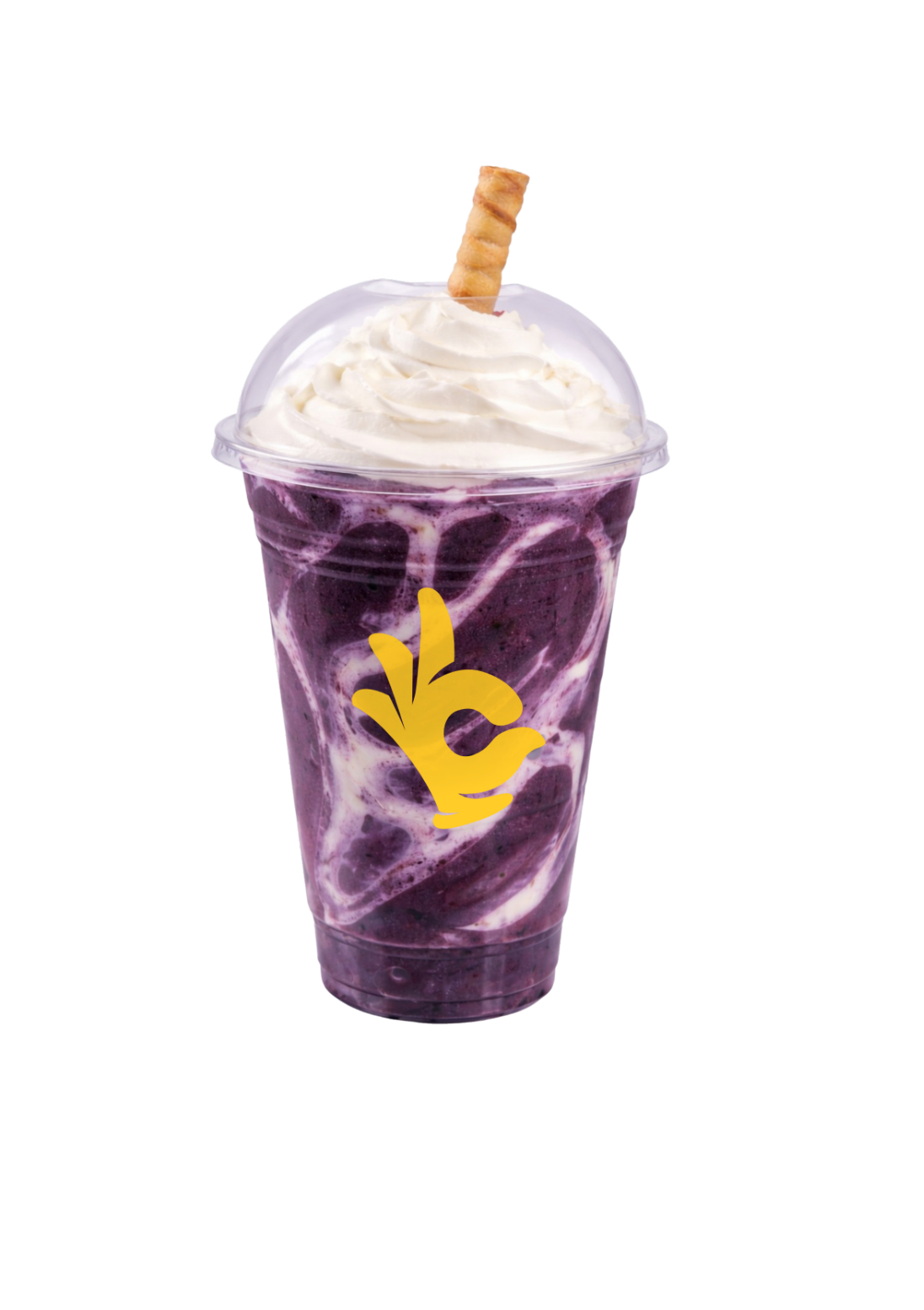
Straight from the pulper to the freezer, frozen a single time, and kept that way until it hits our machine. We serve it stiff enough to stand a spoon in.
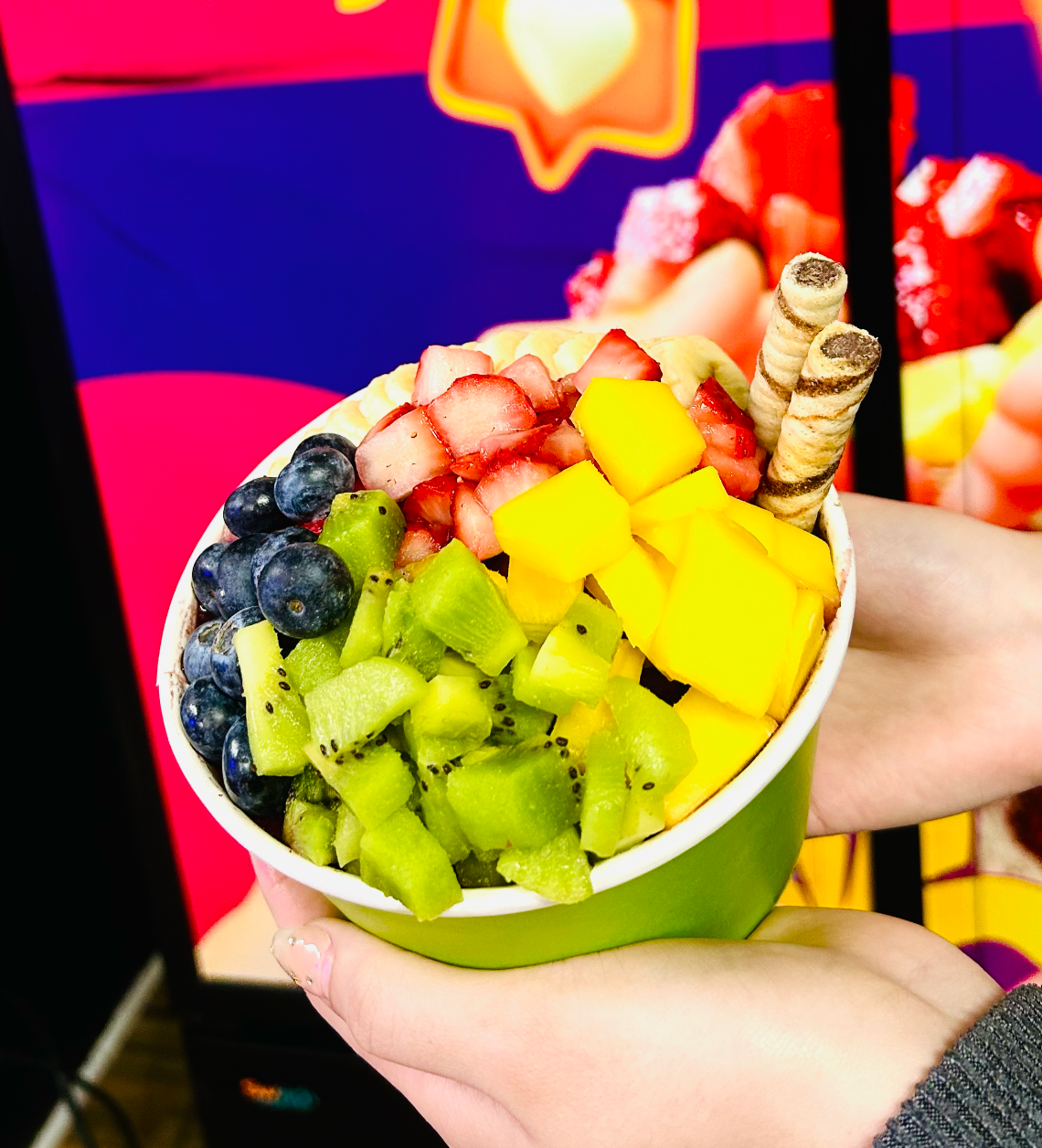
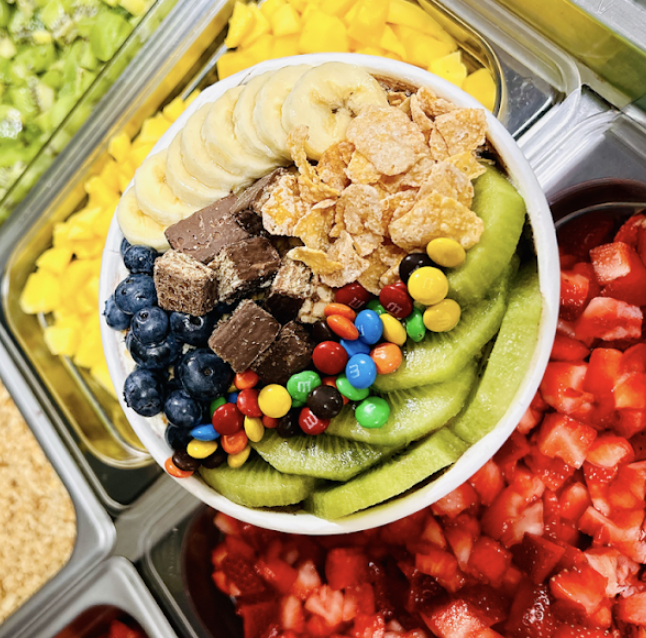
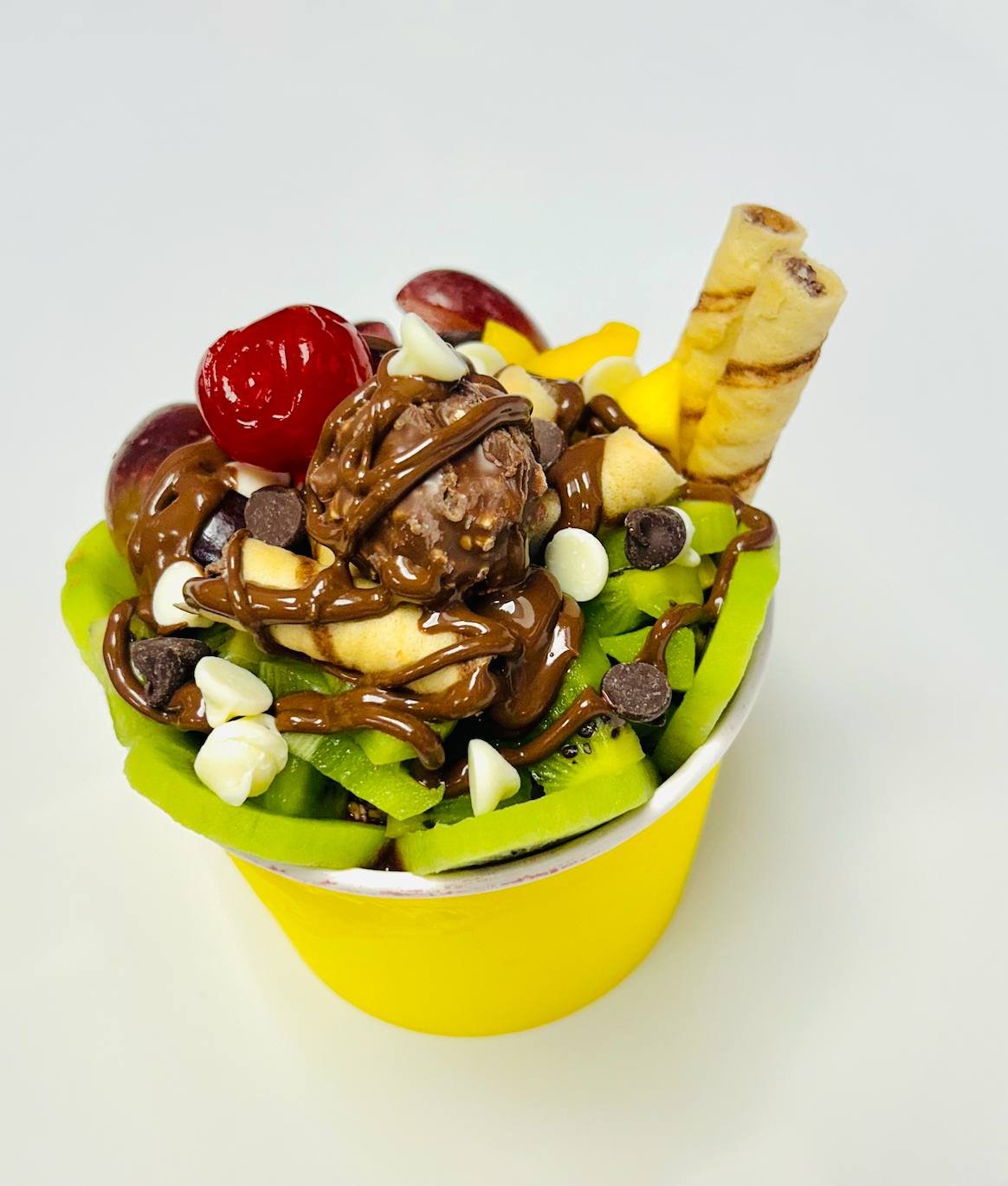
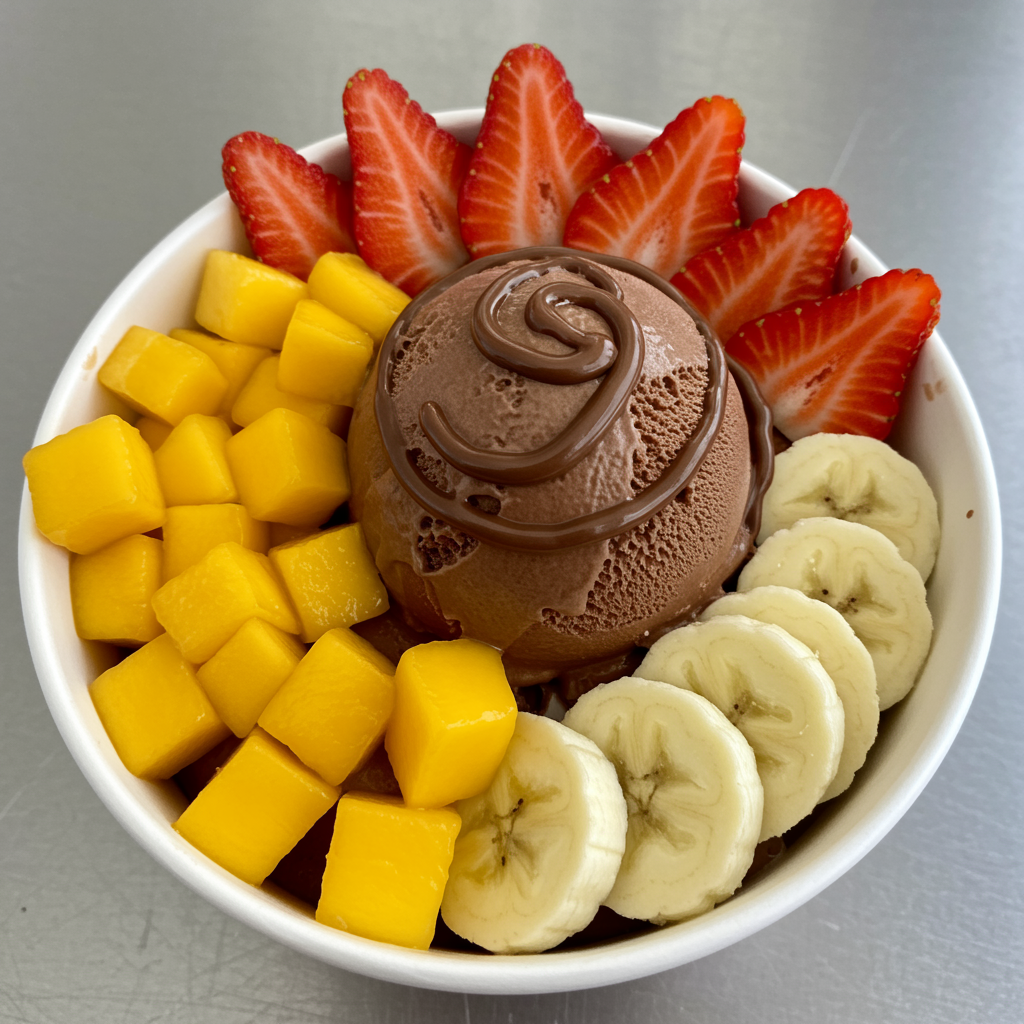
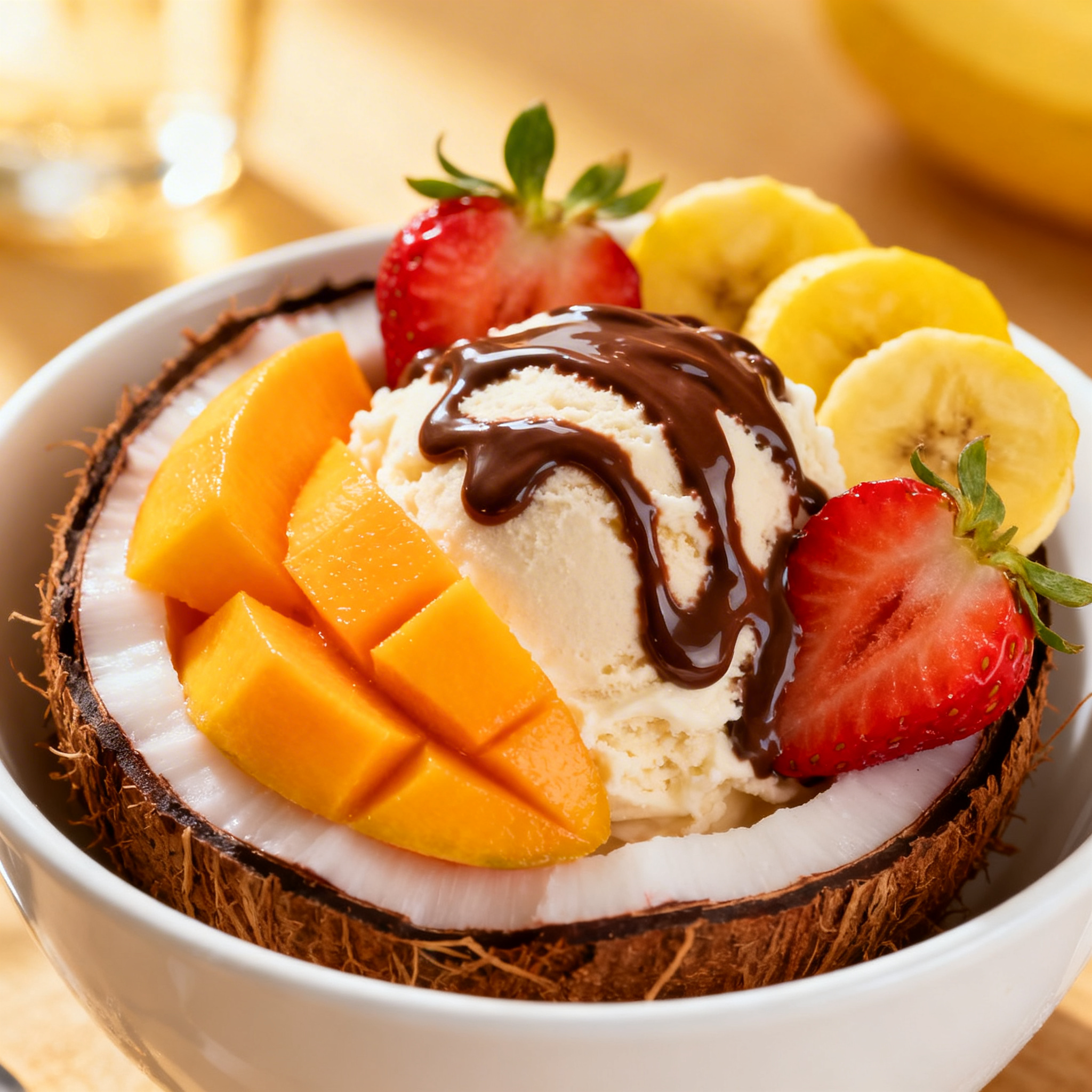
In the Amazon, açaí is dinner: thick, barely sweet, eaten with farinha out of a deep bowl. We kept the thickness and the bowl, and let the fruit on top do the sweetening.